Grain Bins, Machine Sheds, and More: Financing Ag Infrastructure
The Union Bank's guide to building your operation's next chapter


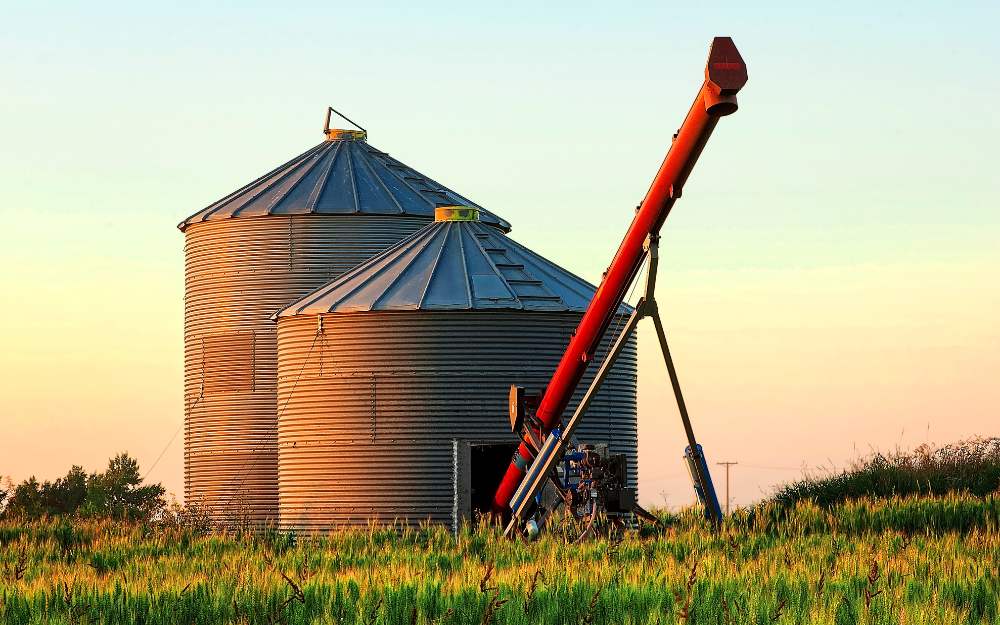
Every farm operation reaches a point where the equipment and the buildings around it need to catch up with the ground being worked. Maybe it's a grain bin so you can hold your crop for a better price instead of hauling straight to the elevator. Maybe it's a machine shed so equipment isn't sitting out through a North Dakota winter. Whatever the project, the question is usually the same: what will it cost, and what's the smartest way to pay for it?
We're looking at the buildings and infrastructure that keep a farm operation moving, what they actually cost, and the financing tools available to get them built sooner rather than later.
Grain bins. Cost is usually measured per bushel of storage, and it varies with size, site prep, and whether you're adding drying and handling equipment. A workable range for a new bin with a concrete foundation runs $2.50 to $4.50 per bushel for the structure itself. A 10,000-bushel bin often lands between $20,000 and $45,000, while a 30,000-bushel bin can run closer to $70,000. Add a dryer, a pit, and conveyors for a full grain center, and the cost per bushel can climb to $9 or $10, since those extras are where the real money goes.
Machine sheds. Post-frame buildings (the classic pole barn style most machine sheds use) typically run $15 to $45 per square foot for the shell alone, with most farm-scale buildings landing in the $20 to $35 range once framing, roofing, and siding are included. A 40x60 shed (2,400 square feet), a common size for housing a tractor, combine, and a few implements, often totals somewhere between $50,000 and $90,000 once a concrete floor, electrical, and doors are factored in. Bigger buildings, like a 50x100, spread fixed costs over more square footage and often pencil out to a better price per foot, even though the total project cost is higher.
Site prep, permits, and electrical work add to both types of projects and are easy to underestimate. Getting a firm, itemized quote before you apply for financing keeps the loan amount realistic.
FSA Farm Storage Facility Loan (FSFL). This is the loan built specifically for on-farm grain storage and handling equipment. Terms run 3 to 12 years, loan amounts go up to $500,000 for storage facilities, and down payment is typically 15 percent (only 5 percent for microloans up to $50,000, which also skip the usual three-year production history requirement). Interest rates are set monthly and have generally run in the mid-3 to low-4 percent range recently, making it one of the more affordable ways to add bins.
FSA Guaranteed Farm Loans. For machine sheds, shops, and other ag buildings that don't fit the FSFL program, an FSA guarantee through a local lender can help. FSA guarantees up to 95 percent of the loan, which gives lenders more room to say yes on projects that might otherwise be a stretch, with guaranteed loan amounts up to just over $2.3 million.
Traditional ag real estate loans and equipment lines of credit. For many producers, a straightforward ag building loan or an operating line of credit through a local bank is the simplest path, especially when the project is smaller or timing doesn't line up with FSA's application cycle. This is where a relationship with a lender who already knows your operation, your ground, and your cash flow pattern makes the process move faster.
Often, the right answer is a mix: FSFL financing for the bin, a conventional loan or line of credit for the shed, and cash or Section 179 savings covering the rest.
Recent tax law changes have made infrastructure investment more attractive at tax time. Section 179 allows farm operations to deduct qualifying purchases in the year they're placed in service rather than depreciating them over decades, and the 2026 deduction cap sits at $2,560,000, with the phase-out starting at $4,090,000 in total purchases. Grain bins and other single-purpose agricultural structures generally qualify. General-purpose machine sheds often fall under 100 percent bonus depreciation instead, which allows the full cost to be written off in the first year as well.
The rules around what qualifies, and how Section 179 versus bonus depreciation plays into your specific tax picture, are worth a conversation with your accountant before you finalize a purchase. But the short version: building now, rather than waiting, may be more tax-advantaged than it has been in years.
A grain bin means marketing flexibility instead of being stuck selling at harvest prices. A machine shed means equipment that lasts longer and needs fewer repairs. Both are investments that pay the operation back over time, and both have financing paths designed to make the upfront cost manageable.
If you're planning a project like this, the best first step is a conversation. Bring your quotes, your production numbers, and your timeline, and we'll help you figure out which combination of tools fits your operation best.